
GPU memory is the memory integrated into a graphics processing unit. This memory stores data that the GPU needs to perform its tasks efficiently, like rendering images and videos. Advanced GPU memory processes a large volume of information in a quick manner, which is essential for improving the system’s performance.
In this article, UniBetter will guide you through HBM vs. GDDR, two leading memory technologies in enhancing GPU capabilities. After reading this page, you will know which type is better suited to your needs!
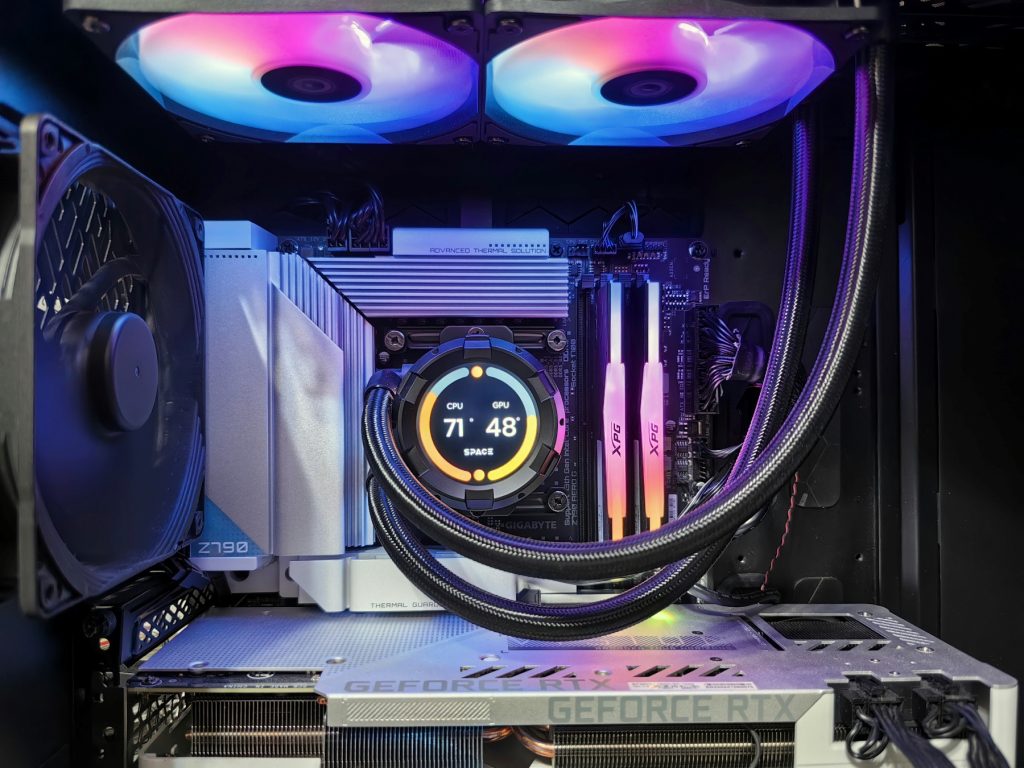
HBM vs. GDDR: HBM Explained
1. What is HBM?
HBM, or High Bandwidth Memory, is a form of 3D-stacked DRAM that offers much higher bandwidth and power efficiency compared to prior generations of memory. These enhancements are achieved with the stacking of multiple layers of memory chips vertically, and these layers are connected via TSVs (Through-Silicon Vias). This 3D architecture allows for shorter data channels, improving data processing speed and electrical efficiency.
For now, some major HBM suppliers are SK Hynix, Micron Technology, and Samsung. Meanwhile, some HBM products are H5VR64ESA8H-N2C from SK Hynix, MT54A16G8080A00AC and MT54A8G8040A00BF from Micron Technology.
Some key attributes of HBM are the following:
- High Bandwidth
From HBM1 to HBM3, the HBM technology achieves high bandwidth due to design innovations like wider data buses for more data transfer at the same time, multiple memory layers for parallel access to the bus, and TSVs for reduced memory latency. This makes HBM chips perfect for applications that need massive data throughput.
- Low Power Consumption
HBM also consumes less power compared to conventional DRAM options. This is enabled by its compact layering design and reduced signal path length. Additionally, different from GDDR, HBM can operate at lower clock speeds while delivering high bandwidth.
- Smaller Footprint
Moreover, HBM stands out with its high-density design. The vertical stacking of memory chips facilitates more capacity within a given footprint. Plus, HBM memory is integrated within the GPU package, further saving more physical space.
2. Applications of HBM
The unique structure makes HBM come with enhanced performance as well as higher costs. Therefore, HBM memory is not as widely applied as GDDR. It is often utilized in performance-intensive applications like:
- Data Centers
HBM is being used in the GPUs of large data centers for smooth machine learning, data analytics, and other compute-intensive operations. Its high bandwidth and low power consumption make it efficient in such performance-demanding environments.
- AI Training
Training artificial intelligence models requires processing vast volumes of data at very fast speeds. The high bandwidth of HBM enables faster transfer of data, hence speeding up the training processes.
- High-Performance Computing (HPC)
Applications involving HPC, such as scientific simulations and complex calculations, also benefit from HBM, given its efficiency in handling large datasets with minimal latency.
HBM vs. GDDR: GDDR Explained
1. What is GDDR Memory?
GDDR memory is a kind of synchronous graphics RAM designed for faster graphics processing. This is an evolution from the standard DDR memory, wherein its optimization focuses more on high-speed data transfer to enhance overall performance for graphics-intensive applications.
For such high performance, GDDR uses a wide range of techniques, including increased clock speeds and large data buses. For now, most GPUs use GDDR6, and some of its examples are the MT61 series from Micron Technology.
Some key features of GDDR are as follows:
- High Data Transfer Rates
GDDR memory can achieve high data transfer rates, making it ideal for application scenarios where quickly processing large amounts of data is essential.
- Wide Data Bus
The wide data bus allows for more data to be transferred simultaneously, enhancing overall performance.
- Improved Power Efficiency
While not as power-efficient as HBM, GDDR has done a great job in improving power efficiency compared to prior generations.
2. Applications of GDDR Memory
GDDR memory finds broad applications in fields that require its high-speed data transfer rate. Common examples include:
- Gaming

In gaming systems, GDDR memory is an essential component to optimize performance. It renders complex graphics by accessing and processing large amounts of data quickly. Its high data transfer rates make for smooth gameplay and realistic visuals.
- Video Editing
GDDR memory can deal with large video files and intensive editing operations. Its high bandwidth helps faster video rendering and editing and enables high-definition video production.
- General-Purpose GPUs (GPGPUs)
GPGPUs use GDDR memory to perform general-purpose computing tasks, such as scientific simulations, deep learning, and other applications that can leverage the parallel processing power of GPUs.
Difference between HBM and GDDR: HBM vs. GDDR
To have a clearer idea of HBM vs. GDDR, there are several summarized differences that indicate why HBM and GDDR fit different applications.
- Bandwidth: HBM is designed to provide much higher bandwidth compared to GDDR, which is ideal for high-performance applications that require huge data throughput.
- Power Consumption: HBM is more power-efficient than GDDR. This is especially important in applications where energy consumption is at a premium.
- Physical Footprint: HBM is designed compactly, which enables it to have a smaller physical footprint and is thus constructive for space-constrained devices.
- Cost: GDDR is generally cheaper than HBM, which is one of the main reasons it sees wide adoption in consumer applications.
Comparatively, HBM memory is a more niche and expensive option, and GDDR memory is a mainstream option with a more affordable price. The GDDR-equipped GPU is capable of handling most applications.
However, the HBM-equipped GPU is crucial in improving productivity to a substantial level. For instance, ChatGPT utilizes a cluster of NVIDIA H100s (HBM-equipped GPUs) for quick responses to millions of global users.
Partner with UniBetter for Authentic and Cost-effective Memory Modules
UniBetter procures and distributes different electronic components, including memory modules like DDR and GDDR SDRAM. We understand the important role of electronic parts and make sure our clients receive brand-new and genuine components by sourcing from 7,000+ reliable suppliers.
Additionally, we employ strict component quality inspection and testing practices with our comprehensive CSD quality control system. You can also expect a great potential amount of cost savings, as our 30+ global procurement experts will find the best value-worthy solutions.
Conclusion
Understanding HBM vs. GDDR can help you make an informed choice. HBM, with its high bandwidth and low power consumption, is intended for high-performance applications, while GDDR stands as a cost-effective solution for consumer applications.
UniBetter has rich expertise in sourcing and distributing authentic GPU memory modules and other types of components. You can contact us for turn-key component procurement solutions if you are having problems finding the right parts.