
On July 30, 2025, a powerful magnitude 8.8 earthquake struck off the Kamchatka Peninsula, triggering widespread tsunami alerts across the Pacific, including Japan and the U.S. West Coast. Although evacuations and precautionary factory shutdowns followed—such as Toyota, Nissan, and Mitsubishi halting operations—the tsunami’s actual impact was limited, with only minor flooding and infrastructure damage reported in Japan and Russia.
Importantly, no critical semiconductor facilities were affected, and key ports quickly resumed operations. Thus, the overall disruption to the global electronics and semiconductor supply chain has been minimal.
This stands in contrast to historical earthquakes that caused major supply chain crises—highlighting how location, infrastructure resilience, and disaster preparedness influence the outcome.
Historical Earthquakes and Their Impact on Electronic Supply Chains
While current reports suggest that the recent earthquake and tsunami have had limited impact on the global electronic component supply chain, past events serve as a reminder of how vulnerable the system can be.
Earthquakes in Asia—particularly large-scale ones in Japan and Taiwan—have historically caused significant disruptions. These regions host some of the most critical semiconductor fabrication facilities and electronics production centers, serving as vital nodes in the global technology infrastructure.
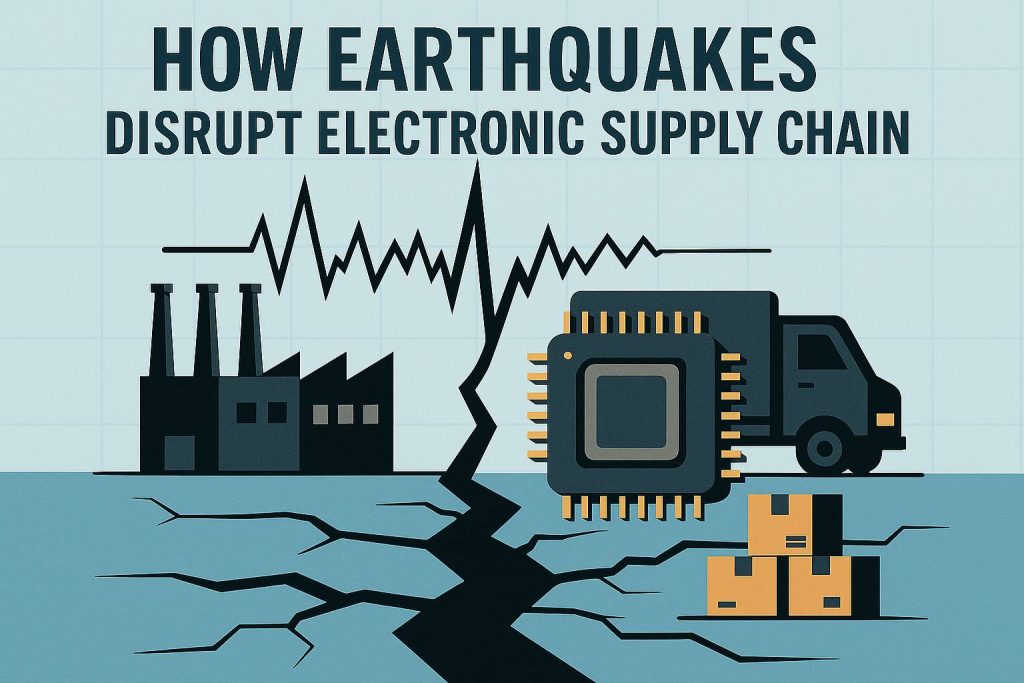
Key historical events include:
- 2011 Tōhoku Earthquake and Tsunami
This catastrophic 9.1-magnitude earthquake, followed by a massive tsunami, devastated Japan’s northeast coast and inflicted severe damage on numerous semiconductor fabrication plants (fabs) and electronics suppliers.
Key manufacturers like Renesas Electronics, a leading automotive chip producer, were forced to halt operations due to extensive structural damage, equipment failures, and widespread power outages. Toshiba and Sony also faced plant shutdowns and supply difficulties.
Impact: The damage to these fabs caused massive production losses, particularly in microcontrollers and automotive-grade semiconductors, which are critical for vehicle manufacturing worldwide. The resulting supply shortages led to a global semiconductor drought impacting automotive production significantly, forcing major carmakers to halt or scale down operations.
Duration: Recovery and capacity restoration took several months, during which the automotive and electronics industries globally faced chip shortages and delayed product launches. This event exposed the fragility of supply chains heavily reliant on centralized production clusters.
- 2024 Hualian Earthquake
Taiwan is home to some of the world’s most advanced semiconductor foundries, including TSMC (Taiwan Semiconductor Manufacturing Company) and UMC (United Microelectronics Corporation). As a result, the island plays a pivotal role in the global supply chain, accounting for over 60% of the worldwide semiconductor foundry market and more than 90% of advanced chip production.
In early 2024, a magnitude 7.4 earthquake struck Taiwan, temporarily suspending the operations of key fabs. Both TSMC and UMC experienced inspections and brief shutdowns to ensure equipment and facility safety. Although there was no major physical damage reported, the stoppage and safety measures led to production delays.
Impact: Most manufacturing facilities resumed operations within a few hours, while certain production lines were estimated to take a few weeks to be fully restored. This relatively quick recovery is good news for major tech companies like Apple and Nvidia, which heavily rely on TSMC for advanced chips. Nevertheless, they still experienced varying degrees of disruption, and TSMC’s Q2 earnings took a hit accordingly.
- Other Recent Natural Disasters Affecting Electronics Supply Chains
Besides earthquakes, the global semiconductor supply chain can be significantly affected by many other disasters. Some key recent events include:
- Flooding: Floods in South Korea (home to Samsung and SK Hynix) in 2024 submerged key production facilities, slowing memory chip manufacturing and delaying shipments. Flooding in India and Bangladesh has also disrupted local and regional electronics manufacturing and the supply of raw materials.
- Typhoons and Hurricanes: Typhoon Yagi in 2024 impacted electronics assembly facilities in Vietnam and Thailand, leading to shipment delays. Hurricanes Milton and Helene damaged infrastructure in Florida, affecting ports and supply routes critical for semiconductor components.
- Wildfires: Russian wildfires in 2024 disrupted the extraction of rare earth metals critical for semiconductors, illustrating how raw material supply chains are also at risk.
These events disrupt critical assembly lines, delay shipments, and cause cascading effects throughout the supply chain that affect OEMs (Original Equipment Manufacturers) across the globe.
Summary: Earthquake Impacts on the Electronics Industry
Large earthquakes, as well as other natural disasters, disrupt the electronics industry through multiple channels:
- Facility Damage: Direct damage to semiconductor fabs or assembly plants results in reduced output capacity.
- Logistics Disruption: Port closures, damaged infrastructure, and rerouted shipments delay delivery of components and finished goods.
- Supply Chain Ripple Effects: Even short-term downtime leads to inventory shortages, price hikes, and production rescheduling.
- Increased Operating Costs: Manufacturers must hold higher safety stocks, find alternate suppliers, or pay premiums for expedited shipping.
- Market Volatility: Delays can shift market dynamics, benefiting some suppliers while penalizing those unable to adapt fast enough.
Recommendations for Electronic Component Buyers
For companies sourcing electronic components, the following strategies can help mitigate the risks posed by earthquakes and related natural disasters:
- Diversify Suppliers and Manufacturing Locations: Avoid over-reliance on a single geographic area prone to seismic activity.
- Maintain Buffer Stocks: Establish regional safety stock to cushion against short-term supply disruptions.
- Use Multi-Modal Logistics: Incorporate alternative shipping routes and ports to hedge against localized shutdowns.
- Monitor Real-Time Alerts: Leverage technology platforms tracking geophysical and shipping disruptions to quickly adjust orders and inventory.
- Engage in Vendor Risk Assessment: Collaborate with suppliers on disaster preparedness to understand their contingency plans and resilience capabilities.
By proactively managing these risks, buyers can reduce exposure to inevitable disruptions from seismic events and maintain smoother production and delivery timelines in a volatile global supply chain environment.
About UniBetter
UniBetter is your trusted partner in electronic component sourcing, with a focus on agility and reliability. Our global supplier base allows us to respond quickly to regional disruptions caused by earthquakes or other natural events. We track real-time developments, assess risks, and act swiftly to secure alternative sources—so you can maintain business continuity.
With years of industry experience and customer-first service, we ensure that your supply chain remains stable, responsive, and optimized under different circumstances. To explore our full range of services, please click here. If you’re experiencing issues with electronic component procurement, don’t hesitate to contact our team by clicking here.
References:
- https://www.renesas.com/en/about/newsroom/regarding-impact-march-11-earthquake-renesas-electronics-operations-and-its-response-blackouts
- https://www.renesas.com/en/about/newsroom/update-2-regarding-impact-march-11-earthquake-renesas-electronics-operations-and-its-response
- https://spectrum.ieee.org/how-japanese-chipmaker-renesas-recovered-from-the-earthquake
- https://www.electronicdesign.com/technologies/industrial/boards/article/21793038/japanese-companies-struggle-with-earthquake-recovery
- https://www.wardsauto.com/suppliers/march-11-2011-day-the-world-stopped-for-japanese-auto-industry
- https://www.sciencedirect.com/science/article/abs/pii/S0925527314002278
- https://www.foxbusiness.com/technology/apple-nvidia-may-see-supply-chain-disruptions-taiwan-earthquake
- https://davidbader.net/post/20240403-phonearena/
- https://randtech.com/navigating-the-impact-of-natural-disasters-on-global-supply-chains-lessons-from-recent-hurricanes-and-earthquakes/
- https://www.siliconexpert.com/blog/latest-updates-taiwan-earthquake-impact-on-semiconductor-supply-chain/
- https://www.reuters.com/technology/tsmc-estimates-losses-924-mln-due-taiwan-earthquake-2024-04-18/